




23 Jan Bible Study on Missions – A Revolution of Heart and Mind
You’ve done missions studies before.
You felt inspired for a week or two. Maybe you prayed more. Maybe you thought about going on a trip.
Then life happened, and six months later you realized you haven’t thought about any of it since the study ended.
Here’s what’s actually going on:
Many approaches to these topics give you information—statistics, stories, biblical foundations. All good stuff. But information alone doesn’t change behavior.
You don’t need another study that makes you feel bad about not doing enough. You need a new mental model, an approach that challenges your heart and helps you to discover what your actually supposed to do with your specific life, gifts, and calling.
That’s what Storyline aims to accomplish.
The Storyline Study: an 8-week Bible study on missions
Trace God’s heart for the nations from Genesis to Revelation, and find your own role in His mission. Built for individuals and small groups.
You’re Ready to Move from Information to Action
You care about God’s global mission. That’s why you’re here.
Maybe you’ve studied it before. Maybe you’ve been on trips. Maybe you’ve been praying about how to engage more intentionally.
Storyline is designed for exactly where you are right now.
Over eight weeks, you’ll discover your unique calling in God’s mission and develop a specific plan for living it out—whether that means supporting church planters overseas, mobilizing your small group, or taking your first steps toward cross-cultural work.
No more wondering what you’re supposed to do. Just clarity, direction, and practical next steps.
 The Gap Between Knowing and Doing
Here’s what we’ve learned from thousands of people who’ve gone through Storyline:
The challenge isn’t usually lack of information. Most Christians already know about the Great Commission and unreached people groups.
The real question is: “How does this fit into my actual life?”
That’s a genuine, honest question. You have a job, family responsibilities, financial commitments, and a church community. Missions can feel like something that happens “over there” or “by other people.”
Storyline helps you discover how God’s mission connects to your real life—right where you are.
Not by guilting you into becoming someone you’re not, but by helping you see how God has already been preparing you for a specific role in His global work.
By Week 8, missions won’t feel like an obligation you’re avoiding. It will feel like a natural expression of who God made you to be.
From Learning About Missions to Living on Mission
Here’s what we’ve discovered works best:
When missions becomes part of who you are—not just something you know about—everything shifts naturally.
Think about areas of your life where you’ve experienced real transformation. Maybe you became a parent, started a business, or committed to a fitness journey. The change happened when your identity shifted, not just when you learned more information.
The same is true with missions.
When you discover your specific role in God’s global work, it doesn’t feel like one more obligation. It becomes a lens through which you see your whole life.
Your prayers become more focused. Your giving becomes more strategic. Your conversations include more people who don’t know Jesus yet. Not because you’re trying harder, but because you’re seeing differently.
That’s what Storyline helps you discover.

The Storyline Study: A Bible Study on Missions Built for Identity Transformation
This is why we created the Storyline Study.
Storyline gives you an 8-week framework that rewires how you see your life in relationship to God’s global mission.
Not through guilt.
Not through manipulation, but honest confrontation with what Scripture actually says about who you are and who God has called you to be.
Here’s how it works:
Weeks 1-2: You discover that missions isn’t a New Testament add-on. It’s been God’s singular obsession since Genesis 12. The entire Bible is a missionary document.
Weeks 3-4: You understand what “unreached people groups” means: who they are and where they live.
Weeks 5-6: You identify YOUR specific role. You discover whether you’re called to go, send, mobilize, pray, or welcome—based on your wiring, gifts, and calling.
Weeks 7-8: You create a personal action plan with 3-5 specific, measurable steps.
Learn more about the Storyline Study →
What Makes a Bible Study on Missions Effective
If you’re evaluating different missions bible studies—whether you choose Storyline or something else—here’s what to look for to ensure you’re investing in transformation, not just information:
1. It Must Start With Solid Biblical Theology, Not Guilt
Poor missions bible studies start with depressing statistics designed to make you feel bad.
Effective ones start in Genesis.
God’s heart for all nations isn’t revealed in Matthew 28:19. That’s the culmination, not the origin.
The Abrahamic covenant in Genesis 12:3 establishes the pattern: “All peoples on earth will be blessed through you.”
Israel’s purpose wasn’t just to be blessed. It was to BE a blessing to the nations.
The Psalms are filled with declarations that God’s glory should be known among ALL peoples.
The prophets consistently point to a future when the knowledge of the Lord covers the earth.
Jesus’s entire ministry—from his genealogy (including Gentiles) to his final commission—is about the nations.
 A good missions bible study rewires your theological operating system.
It shows you that missions isn’t a category of Christian activity (like “prayer” or “evangelism”). It’s the entire narrative arc of Scripture.
Once you see this, you can’t unsee it.
2. It Must Address Why You’re Stuck, Not Just What You Should Do
Information-based bible studies tell you WHAT to do:
- Pray more for missionaries
- Give more financially
- Consider a short-term trip
- Share the gospel
But they skip the critical question: Why haven’t you done this already?
You’ve known these things for years. Why hasn’t your behavior changed?
An effective bible study on missions digs into the psychological and spiritual mechanisms keeping you comfortable.
It asks uncomfortable questions:
- What identity are you protecting by staying on the sidelines?
- What would have to change about your life if you took this seriously?
- What are you afraid of losing?
- Who would you have to become?
This is deep work. It’s uncomfortable. Most people quit at this point.
But the people who push through? They don’t just “learn about missions.” They become different people.
3. It Must Provide a Framework for Action, Not Just Inspiration
The most common failure point in missions bible studies is Week 6.
You finish. Everyone agrees they should “do more.” You pray together. Then… nothing.
Why?
Because inspiration without implementation is just entertainment.
 An effective bible study doesn’t end with feelings. It ends with a written action plan.
By the final week, you should have:
- Specific prayer focus: Not “bless the missionaries” but “Pray for the Baduy people group in Indonesia, specifically for breakthrough in the village of Kanekes”
- Measurable financial commitment: Not “give more” but “$150/month to Pastor Daniel’s church planting network”
- Clear next steps: Not “maybe go on a trip someday” but “Join the September vision trip. Deposit due by March 15.”
- Accountability structure: Not “I’ll try harder” but “Meet with John and Sarah monthly to review progress”
Vague commitments disappear by Tuesday.
Specific commitments create accountability.
4. It Must Work for Different Callings, Not Assume Everyone “Goes”
Here’s where most missions bible studies fail:
They assume missions = moving overseas.
So if you’re not called to relocate to an unreached people group, the entire study feels irrelevant. You tune out.
But the Great Commission doesn’t say “everyone go.”
It reveals that there are multiple critical roles:
1. Goers
These are the people who physically cross cultural and geographic boundaries to share the gospel. Missionaries in the traditional sense. Paul was a goer. Barnabas was a goer. The 72 Jesus sent out were goers.
But only a small percentage of believers are called to this role. Estimates suggest 1-2% of Christians will serve as cross-cultural missionaries. If you’re called to go, nothing else will satisfy you. But if you’re not called to go, there’s no guilt in that—there’s just a different assignment.
2. Senders
No one goes without being sent. Paul makes this explicit in Romans 10. Senders provide financial support, logistical help, encouragement, and advocacy for those on the field.
In Philippians 4:15-17, Paul describes his partnership with the Philippian church. They supported him financially, and he says they share in the “credit” of his ministry. Senders aren’t second-class participants. They’re co-laborers.
3. Mobilizers
Mobilizers help others discover their role. They teach, cast vision, and equip the church to engage in missions. They’re the ones asking “Have you ever considered how God might use you among the nations?”
Think of them as recruiters for the mission. Barnabas had a mobilizing gift—he’s the one who sought out Paul and brought him to Antioch (Acts 11:25-26).
4. Prayer Warriors
Intercessors who wage spiritual battle on behalf of missionaries, unreached peoples, and the advance of the gospel. This isn’t passive well-wishing. It’s strategic, informed, persistent prayer.
When Paul asks churches to pray for him (Ephesians 6:19-20, Colossians 4:3), he’s not being polite. He’s requesting essential support. Prayer opens doors, protects workers, and moves mountains.
5. Welcomers
The nations are coming to us. There are approximately 1.1 million international students in U.S. universities alone—many from countries where missionaries cannot legally enter. Refugees, immigrants, and international workers bring unreached peoples to our neighborhoods.
Welcomers build relationships, offer hospitality, and share the gospel with the nations next door. You don’t need a passport to be a cross-cultural witness.
A good bible study on missions helps you discover YOUR role, not guilt you into a role you’re not called to.
5. It Must Be Honest About Difficulty and Failure Rates
Here’s what most curriculum developers won’t admit:
Most people won’t finish your bible study.
They’ll get to Week 3 or 4, realize this is asking them to actually restructure their priorities, and quietly disappear.
No shame. Real change is terrifying.
But if a missions bible study isn’t honest about this, it’s setting you up for self-deception.
You’ll think: “I tried missions once. It wasn’t for me.”
When the truth is: You quit when it got uncomfortable.
An effective study acknowledges this upfront. It tells you Week 4 will be hard. It warns you that people drop out. It challenges you to decide NOW if you’re serious.
This creates self-selection. Only people who are genuinely ready for transformation continue.
And those who do? They finish with measurable life change.
What the Bible Says About Missions, From Genesis to Revelation
A good Bible study on missions starts here. Here’s something that might surprise you: missions didn’t start with Jesus.
The Great Commission in Matthew 28 isn’t the beginning of God’s global mission. It’s the continuation of something that started thousands of years earlier.
Open your Bible to Genesis 12:1-3. God speaks to a man named Abram:
“I will make you into a great nation, and I will bless you; I will make your name great, and you will be a blessing. I will bless those who bless you, and whoever curses you I will curse; and all peoples on earth will be blessed through you.”
Notice the structure. God promises blessing to Abraham. But that’s not the end of the sentence. The blessing flows through Abraham to all peoples on earth.
This is what missions theologians call the “top line” and “bottom line” of God’s promise:
Top line: God blesses His people.
Bottom line: So that all peoples will be blessed through them.
Once you see this pattern, you can’t unsee it. It appears everywhere in Scripture:
When God parts the Red Sea, He does it “so that all the peoples of the earth might know that the hand of the Lord is powerful” (Joshua 4:24).
When God gives Solomon wisdom, leaders from all nations travel to hear it—spreading knowledge of Israel’s God across the ancient world (1 Kings 4:34).
When Daniel survives the lion’s den, King Darius writes a decree commanding every nation to reverence Daniel’s God (Daniel 6:25-27).
The pattern is consistent: God acts for His people and through His people so that all peoples might know Him.
This isn’t a New Testament innovation. This is the operating system of reality from Genesis forward.
What the Old Testament Reveals About God’s Heart for the Nations
Let’s trace this thread more carefully through the Hebrew Scriptures.
Genesis: The Setup
Genesis 1-11 sets the stage. God creates humanity to fill the earth (Genesis 1:28). After the flood, He repeats the command: “Be fruitful and increase in number and fill the earth” (Genesis 9:1).
But at Babel, humanity rebels. Instead of scattering across the earth as God commanded, they consolidate in one place to make a name for themselves (Genesis 11:4).
God’s response? He scatters them anyway—but not in judgment alone. In the very next chapter, He calls Abraham and reveals His plan to bless all the scattered nations through one family.
The blessing promised to Abraham extends to Isaac (Genesis 26:4) and Jacob (Genesis 28:14). It’s not a one-time statement. It’s a covenant foundation.
The Law: Israel as a Display People
Why did God give Israel the 10 Commandments? Deuteronomy 4:5-6 answers directly:
“See, I have taught you decrees and laws… Observe them carefully, for this will show your wisdom and understanding to the nations, who will hear about all these decrees and say, ‘Surely this great nation is a wise and understanding people.'”
Israel wasn’t chosen for privilege. Israel was chosen for purpose—to be a living demonstration of what life looks like under God’s rule, so that other nations would be drawn to Him.
The Prophets: Vision of Universal Worship
The prophets consistently cast a vision that extends far beyond Israel’s borders:
Isaiah 49:6 declares that Israel’s role is “too small” if it only involves restoring their own nation. God’s servant will also be “a light for the Gentiles, that my salvation may reach to the ends of the earth.”
Habakkuk 2:14 promises a day when “the earth will be filled with the knowledge of the glory of the Lord as the waters cover the sea.”
Psalm 67 is essentially a missions prayer: “May God be gracious to us and bless us… so that your ways may be known on earth, your salvation among all nations.”
The Psalms alone contain dozens of references to all nations praising God, all peoples worshipping Him, the whole earth knowing His glory. This isn’t afterthought theology. It’s the heartbeat of Hebrew worship.
What Jesus Actually Said About the Nations
When Jesus arrives, He doesn’t introduce a new mission. He clarifies and commissions the original one.
Consider what He actually says:
John 3:16: “For God so loved the world…” Not just Israel. The world.
Matthew 24:14: “And this gospel of the kingdom will be preached in the whole world as a testimony to all nations, and then the end will come.” Jesus directly connects the completion of global mission to the culmination of history.
Luke 24:46-47: After His resurrection, Jesus explains that His death and resurrection happened “so that repentance for the forgiveness of sins will be preached in his name to all nations, beginning at Jerusalem.”
Acts 1:8: “You will be my witnesses in Jerusalem, and in all Judea and Samaria, and to the ends of the earth.”
Notice something crucial about Acts 1:8. Jesus doesn’t say “first Jerusalem, then Judea, then Samaria, then the ends of the earth.” He uses “and”—suggesting simultaneous, not sequential, engagement.
The early church understood this. They didn’t wait until everyone in Jerusalem was saved before moving outward. They pursued local and global mission together.
How Paul’s Ministry Philosophy Shapes Our Understanding
The Apostle Paul provides both the theology and the strategy for missions engagement.
In Romans 10:14-15, he lays out the logical chain:
“How, then, can they call on the one they have not believed in? And how can they believe in the one of whom they have not heard? And how can they hear without someone preaching to them? And how can anyone preach unless they are sent?”
This isn’t abstract theology. It’s a cause-and-effect chain that requires human participation at every step. People must be sent so others can hear so they can believe so they can call on the Lord.
Paul’s personal strategy appears in Romans 15:20-21:
“It has always been my ambition to preach the gospel where Christ was not known, so that I would not be building on someone else’s foundation.”
Paul deliberately targeted unreached areas. Not because reached areas didn’t matter, but because his specific calling was to break new ground. Other believers could strengthen and grow established churches. Paul pressed into the frontiers.
This reveals an important principle: not everyone has the same role, but everyone has a role.
The End of the Story: What Revelation Shows Us
The Bible begins with a garden and ends with a city. And in that city, we see the fulfillment of the promise made to Abraham.
Revelation 5:9 describes a song sung to the Lamb:
“You are worthy to take the scroll and to open its seals, because you were slain, and with your blood you purchased for God persons from every tribe and language and people and nation.”
And Revelation 7:9 shows the crowd:
“After this I looked, and there before me was a great multitude that no one could count, from every nation, tribe, people and language, standing before the throne and before the Lamb.”
This isn’t speculation. This is the declared outcome of history. Representatives from every people group will worship Jesus.
If that future is certain—and Scripture says it is—then our present mission is guaranteed to succeed. We’re not hoping it works out. We’re participating in something that will be completed.
The question isn’t whether God’s global mission will be accomplished. The question is whether you’ll be part of accomplishing it.
Key Passages for Your Own Study
Certain texts are especially rich for missions study:
Genesis 12:1-3 — The Abrahamic covenant
Psalm 67 — A missions prayer
Isaiah 49:1-6 — The Servant as a light to nations
Matthew 28:18-20 — The Great Commission
Romans 10:14-15 — The sending chain
Revelation 5:9-10 — The multicultural worship of heaven
Common Mistakes When Choosing a Bible Study on Missions
Before you invest 6-8 weeks of your life in a missions bible study, avoid these traps:
Mistake #1: Choosing Based on Video Quality, Not Transformation Potential
Slick production doesn’t equal life change.
Some of the most transformational bible studies are simple PDFs with discussion questions. Some of the most forgettable have Hollywood-level video production.
Ask: “Will this study make me uncomfortable enough to change?”
Not: “Does this study have good cinematography?”
Mistake #2: Selecting “Safe” Content That Won’t Disrupt Your Small Group
If you’re a small group leader choosing a missions bible study because it seems like a safe, non-controversial topic that will keep everyone engaged… you’ve already failed.
The goal isn’t engagement. It’s transformation.
And transformation creates tension.
Some people in your group will resist. Some will get defensive. Some will drop out.
That’s not a bug. That’s a feature.
Choose the study that will disrupt comfortable Christianity, not reinforce it.
 Mistake #3: Looking for Short, Easy Studies When You Need Deep, Challenging Ones
“6 weeks, 20 minutes per session, easy discussion questions”
This is appealing. It fits your schedule. It won’t overwhelm anyone.
It also won’t change anyone.
Real identity transformation takes time. 8 weeks minimum. Longer is better.
If you’re not willing to invest that time, you’re not actually serious about missions. You’re serious about feeling like you care about missions.
Big difference.
Mistake #4: Assuming Information = Transformation
You can complete a missions bible study, ace the discussion questions, memorize the verses, and leave completely unchanged.
Why? Because you optimized for learning content, not transforming identity.
Look for studies that include:
- Reflection exercises that confront your comfort
- Action planning that creates accountability
- Follow-up systems that prevent backsliding
- Community that maintains momentum
Information is the easy part. Implementation is where transformation happens.
How to Actually Complete a Bible Study on Missions (When Most People Quit)
Let’s be honest: You’ve probably started and quit bible studies before.
Everyone has.
Here’s how to make this time different:
1. Decide Your “Why” Before Week 1
Why are you doing this study?
If your answer is “Because my small group is doing it” or “Because I feel like I should”… you’ll quit by Week 4.
You need a deeper why.
Try completing this sentence: “I’m doing this missions bible study because I can no longer tolerate the gap between _____ and _____.”
Examples:
- “…between my comfortable Christian life and 3 billion unreached people.”
- “…between what I say I believe and how I actually live.”
- “…between my potential kingdom impact and my current level of engagement.”
Write it down. Read it before each session.
2. Find Accountability, Not Just Community
Community is nice. Everyone encouraging each other. No one wants to make anyone uncomfortable.
That’s not what you need.
You need accountability.
Someone who will text you: “Did you pray for the Sundanese this week like you committed?”
Someone who will ask: “What specific action did you take this month?”
Someone who won’t let you coast through with vague commitments.
 3. Expect Week 4 to Be Hard (And Push Through Anyway)
Here’s what happens in Week 4 of most missions bible studies:
The study shifts from learning about missions to confronting what it means for YOUR life.
Suddenly it’s not theoretical. It’s personal.
Questions like:
- What would have to change about your career?
- What would have to change about your budget?
- What would have to change about your time?
- What would have to change about your identity?
This is when most people quit.
They don’t announce it. They just start missing sessions. “Too busy.” “Sick.” “Family stuff.”
Expect this. Plan for it. Commit NOW that you won’t quit when it gets uncomfortable.
Because Week 4 is exactly when the transformation begins.
4. Create Measurable Next Steps, Not Vague Commitments
At the end of your bible study on missions, you should be able to answer these questions with specific details:
What specific unreached people group are you praying for?
Bad answer: “I’ll pray for missionaries more”
Good answer: “The Baduy people in West Java, Indonesia”
How much are you committing financially, and to whom?
Bad answer: “I’ll give more to missions”
Good answer: “$150/month to Pastor Daniel’s Sundanese church planting network, starting February 1”
What’s your 12-month action plan?
Bad answer: “Maybe go on a trip someday”
Good answer: “Join September vision trip to Indonesia. $500 deposit by March 15. Recruit 2 others by June.”
Vague = forgotten by Tuesday.
Specific = accountable, measurable, transformational.
Beyond the Bible Study: Building a Lifestyle, Not Just Completing a Curriculum
Here’s the uncomfortable truth:
Completing a bible study on missions doesn’t make you a missionary-minded Christian.
Living with missions as your daily framework—that’s what creates transformation.
The study is just the catalyst. The real work comes after.
The 3-Month Follow-Up Framework
Most people finish a missions bible study and drift back to normal life within 90 days.
Here’s how to prevent that:
Month 1 After Study:
- Weekly check-ins with accountability partner
- Implement first action step (start monthly giving, begin daily prayer, etc.)
- Report back to your small group
Month 2:
- Bi-weekly check-ins
- Add second action step
- Recruit someone else to do the study
Month 3:
- Monthly check-ins
- Full action plan implemented
- Teach what you learned to someone else
By Month 3, missions isn’t something you “studied once.”
It’s become part of your identity.
Connect With Organizations Doing the Work
A bible study gives you framework. Real organizations give you action.
Research and connect with:
- Mission agencies focused on unreached people groups (not just general overseas ministries)
- Indigenous church planting networks in least-reached areas
- Prayer networks with specific unreached people group focuses
- Local diaspora ministries engaging unreached peoples in your city
Don’t just learn about missions abstractly. Get connected to real people doing real work among real unreached peoples.
 Frequently Asked Questions About Bible Studies on Missions
“How long should a good bible study on missions be?”
Minimum 6 weeks. Ideal is 8-12 weeks.
You need time to:
- Deconstruct wrong thinking about missions and process it
- Rebuild biblical framework
- Discover your role and discuss it with others
- Create action plan
Don’t rush transformation.
“Can I do a missions bible study alone, or do I need a group?”
You CAN do it alone. But you SHOULDN’T.
Transformation requires community and accountability.
Solo studies let you skip the uncomfortable questions, rationalize away the convictions, and quit when it gets hard.
Group studies create social pressure (the good kind) to follow through.
If you genuinely don’t have a group, find one other person. That’s enough.
“What if my church doesn’t prioritize missions?”
Then you prioritize it yourself.
Do the study yourself. Implement the action plan.
As you transform, you’ll naturally attract others who are hungry for the same thing.
Build a missions-minded community within your church; communicate with your church leadership about your heart and what you are trying to do.
“Is a missions bible study appropriate for new Christians?”
Generally yes, but it depends on the study.
Some are designed for mature believers who need deep theological framework.
Others work for anyone at any stage.
Ask: Does this study assume I already know missions terminology, theology, and context? Or does it build from the ground up?
For new Christians, look for studies that start with Genesis (not the Great Commission) and explain basic concepts clearly.
“What’s the difference between a missions bible study and a discipleship bible study?”
They’re not different.
Missions IS discipleship. Discipleship IS missions.
If your discipleship doesn’t lead to missions engagement, it’s not biblical discipleship.
If your missions engagement isn’t rooted in discipleship, it’s just activism.
The best bible studies on missions integrate both: Deep roots in Scripture that lead to global engagement.
“Isn’t missions just a New Testament thing?”
No. As the Genesis-to-Revelation section above shows, God’s heart for all nations appears in Genesis and runs through every major section of the Old Testament. The prophets, the Psalms, and the historical books all contain clear references to God’s global purpose. The New Testament commissions the church to fulfill what was always God’s plan.
“Does everyone need to become a missionary?”
No. Not everyone is called to cross-cultural ministry. But everyone is called to participate in some way—through going, sending, mobilizing, praying, or welcoming. The question isn’t “Am I called to missions?” but “What’s my role in missions?”
“How do I know if I’m called to go overseas?”
The call to go typically involves a combination of desire, gifting, confirmation from the body, and open doors. If you have persistent interest in a specific people or place, gifts suited for cross-cultural ministry, affirmation from mature believers, and practical opportunities, those are strong indicators. But you don’t need perfect certainty before exploring next steps.
The One Question That Determines If You’re Ready for a Bible Study on Missions
Before you buy curriculum, gather your small group, or commit to 8 weeks…
Answer this honestly:
“Am I doing this because I’m genuinely ready to let my life be disrupted, or because I want to feel like I care about missions without actually changing anything?”
If it’s the second one, save yourself the time.
You’ll quit by Week 4, feel guilty about it, and convince yourself “missions just isn’t my thing.”
But if it’s the first—if you’ve reached the point where your comfortable Christian life feels insufficient, where you can’t keep ignoring the gap between your Sunday morning faith and 3 billion unreached people—then you’re ready.
Not for information.
For transformation.
 Ready to Start? Check out the Storyline Study
Start the Storyline Study
Eight weeks, Genesis to Revelation, for individuals and small groups. Available in 8 languages.
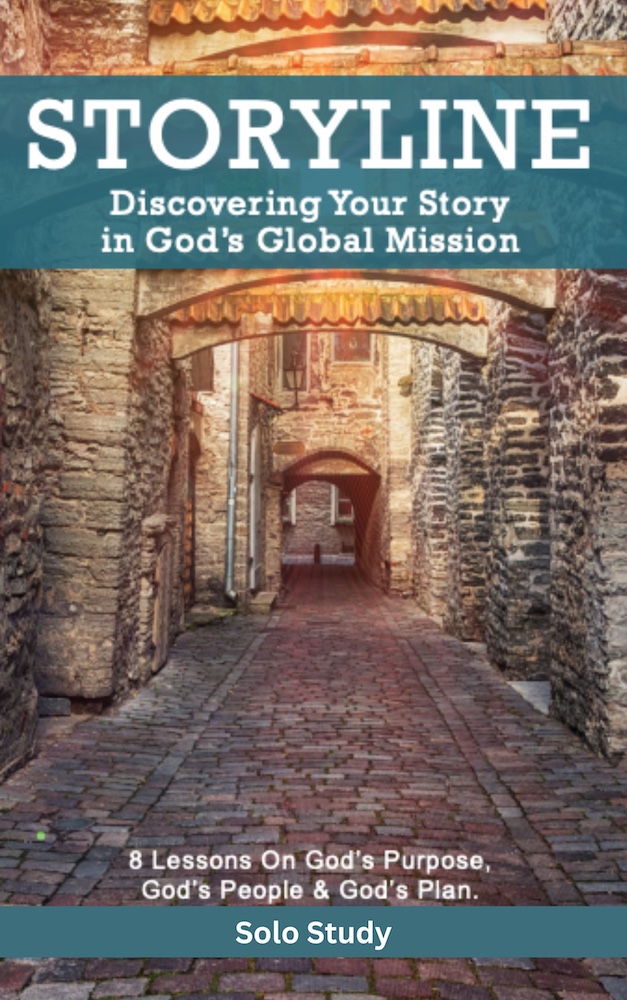
If you want a comprehensive study that traces God’s heart for the nations from Genesis to Revelation, Storyline Study is the perfect next step.
In 8 weeks, your team will:
- Discover how missions isn’t a New Testament add-on—it’s been God’s plan since creation
- Understand what “unreached people groups” actually means and why they matter
- Identify YOUR specific role in the Great Commission (not everyone goes, but everyone has a part)
- Create a personal action plan for missions engagement beyond short-term trips
Storyline has been translated and used in 8 languages: English, Spanish, Russian, Ukrainian, Latvian, Romanian, Portuguese, and Indonesian. It helps people see how they fit into God’s global story, not just how to prepare for a mission trip.
Check out Storyline Study here and equip your team to serve with biblical depth and lasting impact.
May God bless your mission journey, and may His Word transform the way you see His mission.
