



21 Jan How to Prepare for a Mission Trip: 10 Essential Resources
You’ve signed up for a mission trip. The deposit is paid and the dates are on your calendar. Now comes the question this article answers: how do you prepare for a mission trip so that you’re ready when you arrive?
The difference between a frustrating trip and a fruitful one often comes down to preparation. Packing matters, but so does preparing your heart, your mind, your body and your team for what’s ahead. Whether this is your first mission trip or your tenth, preparation takes intention, and the right resources help.
Below you’ll find a quick mission trip preparation checklist, then 10 resources to help you prepare spiritually, build your team, understand the culture you’re entering and serve well. If your team has eight weeks before you leave, start with resource #4, the Storyline Study. Leaders planning the whole trip can use our full mission trip planning checklist.
Why Mission Trip Preparation Matters
Here’s the reality: you can show up unprepared and God can still work. He’s gracious that way. But when you invest time in preparing your heart, learning about the people you’ll serve, and equipping your team, you position yourself to participate more fully in what God is already doing.
Poor preparation leads to:
- Spiritual exhaustion instead of spiritual growth
- Cultural missteps that damage relationships
- Physical illness that sidelines you
- Team conflict that distracts from the mission
- Missed opportunities to serve effectively
Intentional preparation leads to:
- Deeper spiritual impact for you and those you serve
- Cultural sensitivity that builds trust
- Physical readiness that allows you to serve fully
- Team unity that multiplies your effectiveness
- Clear vision for your role in God’s global mission
As the International Mission Board notes, “serving as a student missionary is worth your best efforts to prepare spiritually, physically, intellectually and emotionally.” The same is true whether you’re a student, adult, or leading a team.
Mission Trip Preparation Checklist (Quick Version)
Here is the short version for team members. Leaders, the full mission trip planning checklist starts a year out and covers partners, budgets and forms.
- ☐ Check your passport (some countries require six months of validity after you arrive)
- ☐ Turn in your forms, waivers and deposit
- ☐ Start your support letter and ask people to pray for you
8 to 10 weeks before
- ☐ Start a Bible study with your team (see #4 below)
- ☐ Book a travel clinic visit for vaccines
- ☐ Learn the history and a few phrases of the place you’re going
- ☐ Start walking or exercising if the trip is physical
2 to 4 weeks before
- ☐ Practice your testimony in 3 to 5 minutes
- ☐ Make copies of your passport and insurance card
- ☐ Pack, weigh your bag and repack
The week you leave
- ☐ Commissioning with your church, and a prayer guide for your prayer partners
- ☐ Rest
Here are the resources that help with each of those steps.
 1. Prayer and Spiritual Preparation: The Bible App
What It Is: YouVersion Bible App (free on iOS and Android)
Why You Need It: Before you pack a single item, you need to prepare your heart. Mission trips aren’t spiritual tourism. They’re opportunities to partner with what God is already doing in a community. That partnership begins with prayer and time in God’s Word.
The Bible App by YouVersion has free reading plans on many topics, including plans on missions and serving. Look for plans on:
- Understanding God’s heart for the nations
- Preparing for cross-cultural ministry
- Spiritual warfare and missions
- Servant leadership
- Post-trip integration
How to Use It:
- Download the app 2-3 months before your trip
- Choose a mission-focused reading plan
- Set daily reminders to stay consistent
- Share your plan with teammates for accountability
- Journal your insights as God prepares your heart
Prayer is more than preparation. It’s the foundation of effective missions. As East-West Ministries emphasizes, “Without God, nothing on this mission matters.”
2. Practical Preparation: Mission Trip Packing and Planning Checklist
What It Is: Comprehensive pre-trip checklist from Faithward.org
Why You Need It: The logistics of mission trip preparation can feel overwhelming. Passports, vaccinations, fundraising, team meetings, cultural training: there’s a lot to track. A comprehensive checklist ensures nothing falls through the cracks.
Faithward’s Mission Trip Planning Checklist breaks down preparation into manageable phases:
6-9 months before: Identify host partners, secure dates, announce trip
3-6 months before: Recruit team, plan fundraising, schedule pre-trip meetings
1-3 months before: Gather forms, coordinate travel, finalize lodging
1 month before: Cultural awareness training, final team meetings, packing prep
Week of departure: Final confirmations, team send-off, prayer commissioning
What to Track:
- Passport applications and renewals (must be valid 6+ months after return)
- Medical forms, liability waivers, emergency contacts
- Fundraising progress and budget management
- Flight bookings and travel insurance
- Vaccination requirements and health preparations
- Team covenant and expectations
The checklist helps team leaders stay organized, but it’s equally valuable for individual participants. You can use it to track your personal preparation progress and identify gaps early.
Pro tip: Create a shared Google Doc with your team to track everyone’s progress on key milestones like fundraising goals, required paperwork, and pre-trip training completion.
 3. Cultural Intelligence: Cross-Cultural Training Resources
What It Is: Cultural awareness and preparation materials from your mission organization and additional online resources
Why You Need It: You can unintentionally harm the very people you’re trying to serve if you don’t understand cultural context. Every community has its own history, values, communication styles, and expectations. Learning before you go demonstrates respect and positions you to build authentic relationships.
Cultural preparation resources typically cover:
- History and current realities of the community
- Religious and cultural practices
- Communication styles (direct vs. indirect, personal space, eye contact)
- Gender roles and family structures
- Economic realities and local struggles
- Do’s and don’ts (greetings, dress codes, meal etiquette)
How to Prepare Culturally:
Research the location: Read books, watch documentaries, follow local news sources. If you’re going to serve in Kenya, don’t just Google “Africa”. Learn specifically about the region, tribe, and community you’ll be in.
Learn basic phrases: Even 10-15 phrases in the local language shows respect. “Hello,” “thank you,” “how are you,” “what is your name,” and “God bless you” go a long way. Apps like Duolingo offer free language lessons.
Connect with missionaries in advance: If possible, have a video call with missionaries or local partners before your trip. Ask them specific questions about cultural practices, current challenges, and how to serve most effectively.
Study the history: Understanding colonialism, missions history (both good and bad), economic development, and political context helps you avoid repeating past mistakes and serve with humility.
Ask your host partner how earlier teams have done in their community, and what they wish those teams had known.
4. Biblical Foundation: Storyline Study
What It Is: An 8-week Bible study on God’s heart for the nations and your role in his mission, with a short video for each lesson, built for groups and for individuals
Why You Need It: Most people go on mission trips with good intentions and a fuzzy picture of what missions is. They know they should “help people” or “share Jesus,” but they haven’t seen how the whole Bible tells one story of God reaching the nations. That’s what the Storyline Study gives a team before they go.
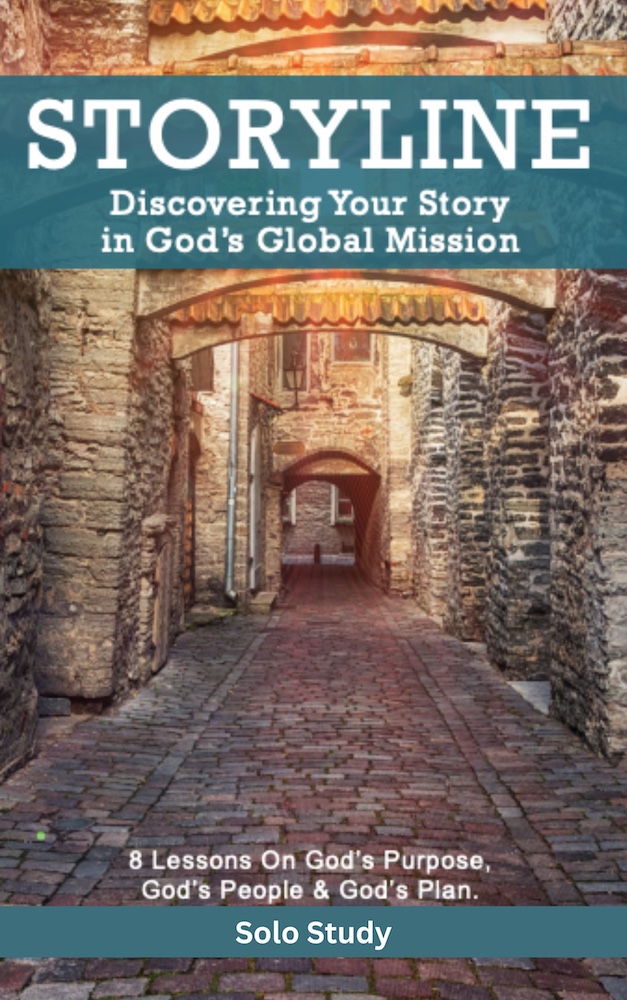 Storyline walks through God’s mission from Genesis to Revelation, from his promise to Abraham that “all peoples on earth will be blessed through you” (Genesis 12:3) to the crowd “from every nation, tribe, people and language” in Revelation 7:9. Missions is not a New Testament add-on. It has been God’s plan from the beginning, and your trip is a small part of it.
The eight lessons:
- Your Story Is Part of a Greater Story
- God’s Mission Through the Bible
- The Great Commission Explored
- Ordinary Heroes of Modern Missions
- Defining the Mission
- Becoming a World Christian
- The Five Practices of a World Christian
- Live the Wartime Lifestyle
Along the way, each person works out whether their main role is to go, send, pray, mobilize or welcome people from other nations who live nearby. By the last week, everyone has written down 3 to 5 concrete steps they can take.
Why This Matters for Your Trip: Most trip preparation focuses on what you’ll do: serve, build, teach. Storyline focuses on why you’re going and how this trip fits into God’s bigger story. That takes pressure off people who think they have to “save” everyone in a week, and it gives them somewhere to go after they come home.
How to Use It: Start 8 to 10 weeks before you leave. Meet weekly as a team, watch the lesson video together, and talk through the questions. Each person does 15 to 20 minutes of reading on their own during the week. Our mission trip planning checklist shows one way to pair each lesson with a planning meeting.
Options:
- Digital study with videos ($24): the full study for one person, on any device.
- Small Group Leader Package ($79): study guide, all eight lesson videos, the leader’s guide, group resources and a coaching call. The best fit for a team leader.
- Not sure yet? Try Week 1 free.
5. Fundraising Made Effective: Fundraising Platforms and Templates
What It Is: Online fundraising tools and proven communication templates
Why You Need It: For many people, fundraising creates the most anxiety in mission trip preparation. Asking for money feels uncomfortable, and many participants don’t know where to start. The right tools and approach make fundraising less about “begging” and more about inviting others to participate in God’s mission.
Recommended Platforms:
GoFundMe or Givebutter – User-friendly platforms for creating fundraising campaigns. Givebutter is especially popular with churches and nonprofits because it offers zero platform fees.
Support Letter Templates:
The most effective fundraising combines:
- Personal letters/emails to friends and family
- Social media updates with clear calls-to-action
- Face-to-face conversations when possible
- Church presentations or small group sharing
Fundraising Best Practices:
Start early: Begin fundraising 4-6 months before your trip. The longer your timeline, the less pressure you feel.
Tell a story, not just a need: Don’t just say, “I need $2,500 for my mission trip.” Explain why you’re going, what you’ll be doing, how God is preparing your heart, and how supporters can participate through giving and prayer.
Make it easy to give: Provide a direct link, QR code, or specific mailing address. Remove every friction point between someone’s desire to give and their ability to do so.
Offer prayer partnership, not just money: Some people can’t give financially but would love to pray for you. Create a prayer partner sign-up and send regular updates.
Express gratitude well: Send personal thank-you notes (not generic emails) to every donor. After your trip, follow up with specific stories about how their support made a difference.
Fundraising goes better when you see it as inviting people into the mission. Your supporters get to be part of what God does on the trip.
6. Health and Safety: CDC Travel Health Resources
What It Is: Official health guidance from the Centers for Disease Control and Prevention
Why You Need It: Getting sick on a mission trip doesn’t just affect you. It affects your team’s ability to serve effectively. Proper health preparation can prevent most common issues.
The CDC’s Travel Health website provides:
- Country-specific vaccination requirements
- Recommended medications (malaria prevention, anti-diarrheal, etc.)
- Food and water safety guidelines
- Insect bite prevention strategies
- Altitude sickness prevention
- Health risks by region
Essential Health Preparations:
Vaccinations: Schedule a travel clinic appointment 6-8 weeks before departure. Some vaccines require multiple doses over several weeks. Common vaccines for international trips include:
- Hepatitis A and B
- Typhoid
- Yellow Fever (required for some countries)
- Routine vaccines (measles, mumps, rubella, tetanus)
Travel Insurance: Many mission organizations require proof of travel medical insurance. Look for a policy that covers emergency medical care and evacuation.
First Aid Kit: Pack a personal kit with:
- Prescription medications (bring extra)
- Anti-diarrheal medication (Imodium)
- Pain relievers (Tylenol, Ibuprofen)
- Antibiotic ointment and bandages
- Oral rehydration salts
- Hand sanitizer and wet wipes
- Insect repellent with DEET
- Sunscreen
Physical Conditioning: Don’t wait until you arrive to get in shape. If your trip involves physical labor, hiking, or long days on your feet, start exercising 2-3 months in advance. Walk daily, build strength, and adjust your sleep schedule to match your trip timeline.
7. Team Building: Small Group Connection Activities
What It Is: Intentional relationship-building exercises and team covenant creation
Why You Need It: Team dynamics can make or break a mission trip. A group of strangers who barely know each other will struggle with conflict, lack cohesion, and miss opportunities to serve effectively together. Teams that invest in building relationships before the trip experience deeper unity and greater impact.
Pre-Trip Team Building Essentials:
Regular meetings: Meet at least monthly (ideally bi-weekly) for 3-4 months before departure. Don’t just handle logistics. Make space for relationships.
Ice breakers and sharing: Start each meeting with activities that help people share their stories, fears, hopes, and gifts. Simple questions like “What are you most excited about?” and “What worries you most?” create vulnerability.
Team covenant: Create a written agreement about how your team will treat each other, handle conflict, make decisions, and represent Christ. Topics to address:
- Attitude and servant-heartedness
- Respect for team leaders and local hosts
- Commitment to the schedule
- Appropriate behavior and dress
- Social media boundaries
- Conflict resolution process
Service together locally: Before going overseas, serve together in your own community. Work at a food bank, visit a nursing home, or help with a church work project. You’ll discover how your team functions under pressure.
Pray together consistently: Don’t save prayer for the trip. Pray together every time you meet. Pray for each other’s fundraising, for the community you’ll serve, for unity, for humility.
Experience Mission makes a good point: teams bond through shared experiences, fun or hard, and early on you may have to create some on purpose.
8. Practical Skills: How to Share the Gospel Cross-Culturally
What It Is: Training in gospel presentation and personal testimony sharing
Why You Need It: One of the most common fears mission trip participants express is: “What if someone asks me about Jesus and I don’t know what to say?” Preparing to share your faith clearly and compellingly should be part of every mission trip preparation.
Three Essential Skills:
The Gospel in 5 Minutes: Learn to clearly explain the gospel in a simple, compelling way. Key elements include:
- God created us for relationship with Him
- Our sin separates us from God
- Jesus died and rose to bridge that gap
- We respond through repentance and faith
- We’re invited into God’s family and mission
Practice explaining this without Christian jargon. Could you share the gospel with a 10-year-old? With someone from a different religious background? With someone who’s never heard of Jesus?
Your Personal Testimony: Prepare a 3-5 minute version of your testimony that follows this structure:
- Life before Christ (briefly)
- How you came to faith
- Life since following Christ
- How Jesus continues to change you
Practice telling your story conversationally, not like a sermon. Your story is powerful because no one can argue with what God has done in your life.
Asking Good Questions: The best evangelists are great listeners. Learn to ask questions that open spiritual conversations:
- “What do you believe about God?”
- “Have you ever read the Bible?”
- “What brings you joy in life?”
- “What are your biggest struggles?”
Resources for Gospel Training:
Most mission organizations provide pre-trip training on evangelism. Take advantage of every session. Practice with your team before you go. Role-play difficult scenarios. Get comfortable being uncomfortable.
Cru offers free evangelism training tools including the “God Tools” app which has gospel presentations in multiple languages, conversation starters, and follow-up resources.
9. Communication: Staying Connected and Sharing Your Story
What It Is: Tools and strategies for communicating during and after your trip
Why You Need It: Communication serves two purposes: keeping supporters informed and processing your experience. Both are important for a healthy mission trip.
During Your Trip:
Plan limited updates: Most mission organizations discourage constant social media posting during trips. It’s distracting, can be culturally insensitive, and prevents you from being fully present. But supporters do want to hear from you.
Best practice: Assign one team member per day to post a brief update and 2-3 photos. Use a team Instagram or Facebook page rather than everyone posting individually.
After Your Trip:
Debrief with your team: Schedule a reunion 2-4 weeks after returning. Our mission trip devotions include two for after you come home. Share highlights, challenges, and what God taught you. Process culture shock and re-entry together.
Share with supporters: Those who gave and prayed deserve to hear what happened. Options include:
- Personal thank-you notes with a specific story
- Church presentation or testimony
- Blog post or video
- Small group sharing
Continue the conversation: Don’t let your mission trip become an isolated “mountaintop experience.” YouthWorks emphasizes planning for after the trip is often neglected but crucial. Find 2-3 people who will meet with you monthly to ask hard questions about how you’re applying what you learned.
10. Long-Term Engagement: Ongoing Missions Resources
What It Is: Tools and connections for staying engaged with missions after your trip
Why You Need It: The purpose of a mission trip isn’t just the trip itself. It’s to awaken you to God’s global mission and your role in it for the rest of your life.
Avoid the “Mission Trip High” Crash:
Many participants return home excited about missions but have no idea how to stay engaged. Within weeks, the experience fades and life returns to normal. Don’t let that happen.
Ways to Stay Engaged:
Continue supporting your host partners: Stay in touch with missionaries or local leaders. Send encouragement, pray regularly, give financially if possible.
Connect with missions-focused communities: Find others in your church or area who share your passion for missions. Meet regularly to pray, learn, and mobilize others.
Read missions biographies: Stories of missionaries like Hudson Taylor, Amy Carmichael, Eric Liddell, and Jim Elliot fuel long-term passion.
Consider longer-term opportunities: Could you do a year of missions service? Teach English overseas for 2 years? Join a church planting team? Your summer trip might be the beginning of a lifetime calling.
Mobilize others: Share your story with youth groups, small groups, and friends. Help others discover their role in God’s mission. The best way to steward your experience is to invite others into it.
Pray for unreached people groups: Joshua Project provides detailed information on unreached peoples worldwide. Adopt a people group and pray for them consistently.
For many participants, a short-term mission trip becomes the catalyst for a lifetime of missions engagement, whether that means going overseas long-term, mobilizing others in their church, supporting missionaries financially, or welcoming refugees in their city.
Your Mission Trip Starts Now
Here’s what most people get wrong about mission trip preparation: they think it’s about getting ready to go somewhere. But the truth is, preparation is where transformation begins.
The heart changes that happen in the months before your trip, through prayer, Bible study, cultural learning and team building, are often more significant than what happens during the trip itself.
The person who shows up on departure day after intentionally preparing is fundamentally different from the person who just “wings it.” One is ready to serve effectively. The other is reacting, learning on the fly, and often distracted by preventable problems.
Next Steps for Your Preparation
Here’s how to use these 10 resources effectively:
8-12 weeks out:
- Download YouVersion Bible App and start a missions reading plan
- Begin Storyline Study with your team
- Review the mission trip planning checklist and identify gaps
- Start fundraising using online platforms
6-8 weeks out:
- Schedule travel health appointment for vaccinations
- Research your destination’s culture, history, and language
- Practice sharing your testimony and the gospel
- Create team covenant and build relationships
2-4 weeks out:
- Complete all paperwork and confirmations
- Pack using the preparation checklist
- Have final team meetings
- Invite prayer partners to commit to praying during your trip
1 week out:
- Finalize logistics and confirm travel details
- Have a send-off gathering with your church
- Pray as a team one final time before departure
- Print your team’s mission trip devotions
- Rest well. You’ll need your energy
After your trip:
- Schedule team debrief within 2-4 weeks
- Thank supporters personally
- Share your story publicly
- Identify how you’ll stay engaged with missions long-term
Mission Trip Preparation FAQ
How far in advance should you prepare for a mission trip?
Team members should start three to six months out with passports, forms and fundraising, and begin spiritual and team preparation 8 to 10 weeks before departure. Leaders planning an international trip should start 10 to 12 months ahead.
How do you spiritually prepare for a mission trip?
Pray daily for the trip and the people you’ll serve, study what the Bible says about God’s mission with your team, practice sharing your testimony, and ask a few people to pray for you by name. A team Bible study like the Storyline Study gives your meetings a clear plan.
What should a mission team do in pre-trip meetings?
Study Scripture together, pray, build a team covenant, learn the culture, practice sharing the gospel, and handle logistics. Weekly meetings for the last eight weeks work well.
What Bible verses are good for a mission trip?
Start with Genesis 12:1-3, Isaiah 6:8, Matthew 28:18-20, John 20:21, Acts 1:8 and Revelation 7:9. See 7 mission trip Bible verses for churches and teams.
Preparing a mission team?
Get the 10-passage team Bible study plan by email, with a few short emails to help your team prepare, serve well and come home ready to keep going.
The Investment Is Worth It
Yes, thorough preparation requires time, energy, and intention. It would be easier to just show up. But the difference in impact, for you and for those you serve, is night and day.
When you prepare well, you:
- Serve more effectively because you understand context
- Build deeper relationships because you’ve learned the culture
- Experience less conflict because your team is unified
- Avoid illness and preventable problems
- Return home ready to integrate what you learned
Most importantly, preparation positions you to be fully present to whatever God wants to do in and through you.
Your mission trip is more than a two-week experience. It’s an invitation to join God’s global mission for the rest of your life. And that invitation begins now, in the preparation.
Don’t just pack your bags and show up. Prepare your heart. Equip your team. Learn about the people you’ll serve. And trust that God will use your faithful preparation to accomplish more than you could ask or imagine.
Ready to take the next step? Start with prayer, dive into Storyline Study, and begin checking items off your preparation checklist.
In 8 weeks, your team will:
- See how missions runs through the whole Bible, from God’s promise to Abraham to every nation in Revelation 7
- Understand what “unreached people groups” actually means and why they matter
- Find each person’s role in the Great Commission (not everyone goes, but everyone has a part)
- Write down 3 to 5 concrete steps for after the trip
Storyline has been translated and used in 8 languages: English, Spanish, Russian, Ukrainian, Latvian, Romanian, Portuguese, and Indonesian. It helps people see how they fit into God’s global story, not just how to prepare for a mission trip.
See the Storyline Study or try Week 1 free.
For more mission trip preparation resources, check out:
- Mission Trip Planning Checklist: A 12-Month Timeline for Leaders
- Mission Trip Devotions for Teams: 12 Short Devotions
- Mission Trip Bible Study: 10 Passages Every Team Should Study
- 7 Mission Trip Bible Verses for Churches and Teams
- 7 Bible Verses About Mission and Outreach
