



21 Jan Mission Trip Bible Study: 10 Passages Every Team Should Study
Your mission trip packing list is complete. Your flights are booked. Your fundraising is finished.
But there’s one more crucial item to check off before you board that plane: spiritual preparation through God’s Word.
After working with mission teams in 75+ countries for over a decade, we’ve seen a clear pattern. Teams that study Scripture together before, during, and after their trip don’t just serve better. They experience transformation that lasts years beyond their return home.
But not just any Bible study will do.
The passages your team studies should do more than inspire. They should challenge your assumptions, reshape your understanding of God’s mission, and prepare you for the cultural, emotional, and spiritual realities you’ll face on the field.
This guide walks through 10 essential Bible passages every mission team should study together. These aren’t just feel-good verses to stick on a team t-shirt. These are foundational texts that will equip you to serve with wisdom, humility, and biblical clarity.
Why Bible Study Matters for Mission Trips
Let’s be honest: it’s tempting to skip the Bible study and jump straight into logistics, fundraising, and packing.
But here’s what happens when teams neglect Scripture:
- They serve from their own strength instead of God’s power
- They fall into “savior complex” thinking (we’re here to rescue these people)
- They treat missions as a project instead of joining what God is already doing
- They return home unchanged, with the “mountaintop experience” fading within weeks
- They miss the biblical framework that could sustain lifelong missional living
Teams that study Scripture together before serving gain:
- Theological clarity: Understanding WHY we do missions (not just that we should)
- Cultural humility: Recognizing we’re learners, not experts
- Realistic expectations: Knowing God’s timeline isn’t our agenda
- Unified purpose: Moving beyond individual motivations to shared mission
- Long-term vision: Seeing this trip as one step in God’s global story
So before you pack that extra pair of socks, invest time in packing something far more valuable: biblical truth.

How to Use This Bible Study Guide
These 10 passages can be studied in several ways:
Option 1: Pre-Trip Preparation (10 Weeks Before)
Study one passage per week in the 10 weeks leading up to your trip. This gives your team time to wrestle with challenging ideas and build biblical foundation.
Option 2: Intensive Pre-Trip Weekend (1-2 Weeks Before)
Dedicate a Saturday to studying all 10 passages as a team. Break for meals and activities, but create an immersive experience of Scripture saturation before you go.
Option 3: During-Trip Daily Devotions
Use these passages as your daily team devotions during the trip itself. Start each morning with one passage, discuss it briefly, then reflect on how you saw it played out in your service that evening.
Option 4: Combination Approach (Recommended)
Study passages 1-5 before you leave (foundation), use passages 6-10 during the trip (application), then revisit all 10 in your post-trip debrief.
Study Method for Each Passage:
- Read the passage aloud as a group (use multiple translations if possible)
- Observe: What does this passage say? What do you notice?
- Interpret: What does it mean? What was God communicating to the original audience?
- Apply: How does this apply to our mission trip? What should change in our thinking or actions?
- Pray: Ask God to help you live out what you’ve learned
Now let’s dive into the 10 passages.
Passage 1: Matthew 28:18-20 – The Great Commission
“Then Jesus came to them and said, ‘All authority in heaven and on earth has been given to me. Therefore go and make disciples of all nations, baptizing them in the name of the Father and of the Son and of the Holy Spirit, and teaching them to obey everything I have commanded you. And surely I am with you always, to the very end of the age.'” (NIV)
Why This Passage Matters
You can’t understand Christian missions without understanding the Great Commission. This is Jesus’ final instruction to His disciples before ascending to heaven, and it’s the foundation for every mission trip your team will ever take.
But here’s what most people miss: the Great Commission isn’t primarily about going. It’s about making disciples.
Key Observations
- “All authority” – Jesus has the power and right to send us. We’re not going in our own strength.
- “Therefore go” – This could also be translated “as you are going.” Missions isn’t just for the called few. It’s for all followers of Jesus as we move through life.
- “Make disciples of all nations” – The goal isn’t conversions, decisions, or baptisms alone. It’s disciples who follow and obey Jesus. And “all nations” (Greek: panta ta ethne) literally means “all ethnic groups.”
- “Teaching them to obey” – Discipleship isn’t just knowledge transfer. It’s obedience training.
- “I am with you always” – Jesus doesn’t send us alone. His presence goes with us.
Discussion Questions
- How does knowing that Jesus has “all authority” change the way you approach this mission trip?
- What’s the difference between making converts and making disciples? How will we focus on discipleship, not just decisions?
- What does it mean that Jesus sends us to “all nations” (ethnic groups)? How does that shape our view of who’s reached and who’s not?
- How can we partner with what Jesus is already doing rather than treating this trip as our project?
Application for Your Trip
Before you leave, answer this: Are we going to DO missions, or are we going to join Jesus in what He’s already doing?
This mindset shift changes everything. You’re not the hero. You’re not the savior. Jesus is. You’re simply joining His work that started long before you bought your plane ticket and will continue long after you return home.
Action Step: Have each team member write down one specific way they will “make disciples” on this trip (teaching, modeling, encouraging, serving). Share these commitments with the team.
Passage 2: Acts 1:8 – Witnesses to the Ends of the Earth
“But you will receive power when the Holy Spirit comes on you; and you will be my witnesses in Jerusalem, and in all Judea and Samaria, and to the ends of the earth.” (NIV)
Why This Passage Matters
This is Jesus’ final words before He ascends to heaven (recorded in Acts). He gives His followers a roadmap for mission: start local, expand regionally, go globally.
But notice what comes first: power from the Holy Spirit.
Key Observations
- “You will receive power” – Ministry effectiveness doesn’t come from our skills, education, or passion. It comes from the Holy Spirit’s power.
- “When the Holy Spirit comes on you” – Timing matters. The disciples had to wait for the Spirit before they could effectively witness.
- “You will be my witnesses” – Not “you will witness” but “you will BE witnesses.” It’s about identity, not just activity.
- “Jerusalem… Judea… Samaria… ends of the earth” – The gospel spreads in concentric circles: your city, your region, your nation, the world.
Discussion Questions
- How have we been preparing to rely on the Holy Spirit’s power rather than our own abilities?
- What’s the difference between “doing witness” and “being witnesses”? How can our lives testify to Christ even when we’re not speaking?
- Many people use Acts 1:8 to justify staying home (“my Jerusalem is enough”). How do we balance local AND global mission?
- How can we be sensitive to the Holy Spirit’s leading during our trip, rather than just following our agenda?
Application for Your Trip
Your mission trip likely takes you somewhere beyond your “Jerusalem.” You’re going to someone else’s Jerusalem to serve alongside local believers who live there year-round.
This means:
- You’re not bringing Jesus to a place He’s never been. He’s already there
- Local Christians are the long-term witnesses; you’re short-term partners
- Your role is to encourage, support, and learn from those already witnessing in their Jerusalem
Action Step: Before you leave, spend time in prayer asking the Holy Spirit to:
- Fill you with His power (not your own strength)
- Make you a faithful witness through your words and actions
- Give you sensitivity to what He’s already doing in the place you’re serving
Passage 3: Isaiah 6:8 – Here Am I, Send Me
“Then I heard the voice of the Lord saying, ‘Whom shall I send? And who will go for us?’ And I said, ‘Here am I. Send me!'” (NIV)
Why This Passage Matters
This is one of the most famous mission verses in Scripture. Isaiah’s response to God’s call has inspired generations of missionaries to step out in faith.
But context matters. Read the verses before Isaiah 6:8, and you’ll see something crucial: Isaiah had just encountered the holiness of God, confessed his sin, and experienced cleansing (Isaiah 6:1-7).
His willingness to be sent came AFTER his worship and confession, not before.
Key Observations
- Isaiah saw God’s holiness first (vv. 1-4) – The throne room vision humbled him
- He recognized his own sinfulness (v. 5) – “Woe to me! I am ruined! For I am a man of unclean lips”
- He experienced God’s cleansing (vv. 6-7) – The coal touched his lips, his guilt was taken away
- Only then was he ready to be sent (v. 8) – “Here am I. Send me!”
Discussion Questions
- What motivated Isaiah to volunteer? Was it guilt, excitement, obligation, or something else?
- How does encountering God’s holiness change our approach to service? Should we feel “woe is me” before we feel “send me”?
- Isaiah didn’t know what the mission would entail when he volunteered (spoiler: it was a hard message). How do we surrender to God’s plan even when we don’t know the details?
- What areas of sin or “unclean lips” do we need God to cleanse before we serve?
Application for Your Trip
It’s easy to romanticize missions. The fundraising videos, the excited Instagram posts, the vision of changed lives: it all looks heroic and inspiring.
But Isaiah’s call reminds us: effective mission work starts with humility, not heroism.
Before you can say “Send me,” you need to say “Woe is me.”
Action Step: Set aside time for personal confession before your trip. Ask God:
- What attitudes do I need to confess? (pride, superiority, savior complex)
- What motivations are impure? (wanting to be seen as spiritual, looking for adventure)
- Where do I need Your cleansing before I can serve in Your name?
For a deeper dive into God’s mission throughout Scripture, consider studying the Storyline Study, which walks through God’s heart for the nations from Genesis to Revelation.

Passage 4: Romans 10:13-15 – How Beautiful Are the Feet
“For ‘Everyone who calls on the name of the Lord will be saved.’ How, then, can they call on the one they have not believed in? And how can they believe in the one of whom they have not heard? And how can they hear without someone preaching to them? And how can anyone preach unless they are sent? As it is written: ‘How beautiful are the feet of those who bring good news!'” (NIV)
Why This Passage Matters
Paul lays out the logical necessity of missions in five questions that build on each other like a chain:
- People must call on the Lord to be saved
- But they can’t call on someone they don’t believe in
- They can’t believe in someone they haven’t heard about
- They can’t hear unless someone tells them
- No one can tell them unless they’re sent
This is why missions exists: there are people who have never heard the name of Jesus, and someone needs to go tell them.
Key Observations
- “Everyone who calls on the name of the Lord will be saved” – Salvation is available to all who call on Jesus
- The chain of necessity – Belief requires hearing, hearing requires preaching, preaching requires sending
- “How beautiful are the feet” – God doesn’t call the work beautiful. He calls the FEET beautiful. The messengers themselves are precious to Him.
- Someone must be sent – Missions is intentional. It requires people willing to GO.
Discussion Questions
- Paul asks “How can they hear without someone preaching?” How does this apply to the unreached people groups who have never heard the gospel even once?
- What’s our responsibility to those who haven’t heard? Is it enough to live a good life in our own city, or are we called to GO?
- How does it change your perspective to know that God calls your feet “beautiful”? You might feel inadequate or unqualified, but God sees beauty in your willingness to go.
- What happens if no one goes? What’s the consequence of our inaction?
Application for Your Trip
You are the answer to Paul’s rhetorical question: “How can they hear without someone preaching to them?”
The people you’ll serve this summer have likely heard about Jesus. But there are 3 billion people who haven’t: unreached people groups with no Bible, no church, no missionaries, and no access to the gospel.
Your mission trip is training for a lifetime of missions engagement. This trip isn’t the finish line; it’s the starting line.
Action Step: Research one unreached people group your team could pray for and potentially support long-term. Use resources like JoshuaProject.net to learn about people who still haven’t heard the good news, and read the five types of unreached to see why some places stay without a witness.
Passage 5: Genesis 12:1-3 – Blessed to Be a Blessing
“The Lord had said to Abram, ‘Go from your country, your people and your father’s household to the land I will show you. I will make you into a great nation, and I will bless you; I will make your name great, and you will be a blessing. I will bless those who bless you, and whoever curses you I will curse; and all peoples on earth will be blessed through you.'” (NIV)
Why This Passage Matters
Most people think missions starts in the New Testament with the Great Commission. But God’s heart for all nations begins in Genesis 12, when He calls Abraham and makes a covenant promise.
Notice the structure of God’s blessing:
- I will bless you
- You will BE a blessing
- ALL peoples on earth will be blessed through you
God blesses Abraham not just FOR Abraham, but THROUGH Abraham to reach all nations.

Key Observations
- “Go from your country” – Abraham had to leave comfort and familiarity
- “To the land I will show you” – He didn’t know the destination when he obeyed
- “I will bless you” – God’s blessing comes first
- “You will be a blessing” – But the blessing isn’t for hoarding. It’s for sharing
- “All peoples on earth” – God’s ultimate goal is global, reaching every people group
Discussion Questions
- How does this passage challenge the idea that God’s blessings are just for us to enjoy? What’s the purpose of blessing?
- Abraham had to leave his country, his people, and his family. What are we willing to leave behind to follow God’s call?
- How does knowing that God’s plan to reach “all peoples” started in Genesis change the way we think about missions?
- In what ways have we been blessed by God? How can we be a blessing to others on this trip?
Application for Your Trip
You’ve been blessed with salvation, family, resources, education, freedom, opportunity.
The question is: Will you hoard those blessings, or will you be a conduit of blessing to others?
Genesis 12 reminds us that God blesses His people for a purpose: so that ALL peoples on earth will be blessed.
Your mission trip is a small but significant way you’re joining that 4,000-year-old promise.
Action Step: Make a list of the ways God has blessed you (spiritually, materially, relationally). Then identify 3 specific ways you will use those blessings to bless others on your trip.
Passage 6: John 4:35-38 – The Harvest Is Ready
“Don’t you have a saying, ‘It’s still four months until harvest’? I tell you, open your eyes and look at the fields! They are ripe for harvest. Even now the one who reaps draws a wage and harvests a crop for eternal life, so that the sower and the reaper may be glad together. Thus the saying ‘One sows and another reaps’ is true. I sent you to reap what you have not worked for. Others have done the hard work, and you have entered into their labor.” (NIV)
Why This Passage Matters
Jesus speaks these words right after His conversation with the Samaritan woman at the well. She runs back to her village, and people are streaming out to meet Jesus.
His point to the disciples: The harvest is NOW. Not in four months. Not someday. Right now.
And critically, Jesus reminds them they’re entering into work that others started. They’re not the first laborers. They’re joining a process already in motion.
Key Observations
- “Open your eyes and look” – We can miss what God is doing if we’re not paying attention
- “The fields are ripe for harvest” – There are people ready to respond to the gospel right now
- “One sows and another reaps” – Different people play different roles in the harvest
- “You have entered into their labor” – We benefit from the work of those who came before us
Discussion Questions
- How can we “open our eyes” to see what God is already doing in the place we’re serving?
- Why is it important to remember that we’re entering into work that others have started? How does this shape our expectations?
- What if we’re the “sowers” on this trip rather than the “reapers”? How do we serve faithfully even if we don’t see immediate results?
- How can we honor and learn from the local Christians who have been faithfully working long before we arrived?
Application for Your Trip
You’re not going to “bring Jesus” to a place He’s never been.
You’re not the first person to pray for this community.
You’re not the pioneer breaking new ground.
More likely, you’re entering into work that missionaries, local pastors, and faithful Christians have been doing for years or even decades.
Your job is to join them, support them, learn from them, and add your labor to theirs.
Action Step: Before you arrive, learn the names of at least 3 local believers or missionaries who have been serving in that area long-term. Commit to asking them: “How can we support what you’re already doing?” rather than imposing your own agenda.
Passage 7: 1 Corinthians 13:1-3 – Love Is the Point
“If I speak in the tongues of men or of angels, but do not have love, I am only a resounding gong or a clanging cymbal. If I have the gift of prophecy and can fathom all mysteries and all knowledge, and if I have faith that can move mountains, but do not have love, I am nothing. If I give all I possess to the poor and give over my body to hardship that I may boast, but do not have love, I gain nothing.” (NIV)
Why This Passage Matters
On a mission trip, it’s easy to get caught up in tasks, goals, and metrics. How many people did we serve? How many decisions for Christ? How much work did we accomplish?
But Paul reminds us: without love, even the most impressive ministry is worthless.
You can preach with eloquence, perform miracles, give sacrificially, and even die as a martyr, but if it’s not motivated by genuine love, it counts for nothing in God’s eyes.
Key Observations
- “If I speak… but do not have love” – Eloquent communication without love is just noise
- “If I have… all knowledge… but do not have love” – Theological correctness without love is empty
- “If I give all I possess… but do not have love” – Even extreme generosity without love is worthless
- “I gain nothing” – The consequence isn’t just that others aren’t helped. We ourselves gain nothing
Discussion Questions
- How do we know if we’re serving out of genuine love versus guilt, obligation, or desire to be seen as spiritual?
- What does it look like to love the people we’re serving, not just complete tasks for them?
- How can we show love to people even when there’s a language barrier or cultural differences?
- What’s the difference between loving someone and pitying them? How do we avoid the “savior complex”?
Application for Your Trip
Your mission trip might include incredible acts of service: building homes, teaching VBS, distributing food, sharing the gospel.
But if those acts aren’t rooted in genuine love for the people you’re serving, they’re just resounding gongs and clanging cymbals.
Love means:
- Learning names, not just serving nameless faces
- Listening to stories, not just accomplishing tasks
- Receiving from others, not just giving to them
- Honoring dignity, not treating people as projects
- Building relationships, not just checking boxes
Action Step: Commit as a team to slow down during your trip. Don’t be so task-focused that you miss opportunities to simply sit with people, hear their stories, and love them well.
Passage 8: Galatians 6:9-10 – Don’t Grow Weary in Doing Good
“Let us not become weary in doing good, for at the proper time we will reap a harvest if we do not give up. Therefore, as we have opportunity, let us do good to all people, especially to those who belong to the family of believers.” (NIV)
Why This Passage Matters
Mission trips are hard.
The heat is oppressive. The food is unfamiliar. You’re exhausted. Someone on your team is being difficult. The work is physically demanding. You’re not seeing the results you hoped for.
And it’s only Day 3.
This is when Paul’s words become essential: “Let us not become weary in doing good.”

Key Observations
- “Let us not become weary” – Weariness is expected. Paul isn’t saying “you won’t get tired.” He’s saying “don’t let tiredness stop you.”
- “In doing good” – Not doing big, impressive things. Just doing good.
- “At the proper time we will reap a harvest” – God’s timing isn’t our timing. The harvest may not come on your trip. But it will come.
- “If we do not give up” – The key is perseverance, not perfection
- “Especially to those who belong to the family of believers” – Prioritize serving fellow Christians
Discussion Questions
- What kinds of weariness might we face on this trip? (physical, emotional, spiritual, relational)
- How do we encourage each other when someone is struggling or wants to give up?
- What if we don’t see a “harvest” during our trip? How do we trust God’s timing?
- Why does Paul say to especially serve “those who belong to the family of believers”? What does that look like practically?
Application for Your Trip
You will get tired. You will face disappointment. You will want to quit.
In those moments, remember:
- You’re planting seeds that someone else may harvest
- God sees your faithfulness even when you don’t see results
- Perseverance matters more than performance
- The harvest will come “at the proper time,” so keep sowing
Action Step: Create a team covenant that includes this commitment: “When one of us is weary, we will remind each other of Galatians 6:9 and encourage perseverance.”
Passage 9: Matthew 25:35-40 – Whatever You Did for the Least of These
“For I was hungry and you gave me something to eat, I was thirsty and you gave me something to drink, I was a stranger and you invited me in, I needed clothes and you clothed me, I was sick and you looked after me, I was in prison and you came to visit me.’ Then the righteous will answer him, ‘Lord, when did we see you hungry and feed you, or thirsty and give you something to drink? When did we see you a stranger and invite you in, or needing clothes and clothe you? When did we see you sick or in prison and go to visit you?’ The King will reply, ‘Truly I tell you, whatever you did for one of the least of these brothers and sisters of mine, you did for me.'” (NIV)
Why This Passage Matters
This passage radically reorients how we view service.
When you feed the hungry, you’re feeding Jesus.
When you welcome the stranger, you’re welcoming Jesus.
When you care for the sick, you’re caring for Jesus.
Every act of service to “the least of these” is actually service to Christ Himself.
Key Observations
- “I was hungry… thirsty… a stranger… needing clothes… sick… in prison” – Jesus identifies with the vulnerable, the marginalized, the suffering
- “Whatever you did for one of the least of these” – Not the most impressive, successful, or important. The LEAST.
- “You did for me” – Service to others is service to Jesus
- The righteous didn’t recognize Jesus – They served without expecting recognition or reward
Discussion Questions
- How does it change your motivation to know that serving “the least of these” is serving Jesus?
- Who are “the least of these” in the community where we’re serving?
- How do we serve people with dignity, recognizing that they bear God’s image, rather than treating them as charity cases?
- What’s the difference between serving to be noticed versus serving because we genuinely see Jesus in others?
Application for Your Trip
The people you serve aren’t projects. They’re image-bearers. They’re “the least of these” whom Jesus loves deeply.
When you paint their house, you’re painting for Jesus.
When you play with their kids, you’re playing with Jesus.
When you share a meal, you’re dining with Jesus.
This perspective transforms service from obligation to worship.
Action Step: Before each day of service, pray this simple prayer: “Jesus, help me to see You in every person I meet today.”
Passage 10: Psalm 96:3 – Declare His Glory Among the Nations
“Declare his glory among the nations, his marvelous deeds among all peoples.” (NIV)
Why This Passage Matters
Psalm 96 is a song of worship celebrating God’s reign over all the earth. But tucked in verse 3 is a powerful call to missions: declare God’s glory among the NATIONS.
Not just your city. Not just your country. The nations.
And notice what we’re declaring: not our own achievements, our organization’s success, or our impressive service. We’re declaring HIS glory and HIS marvelous deeds.

Key Observations
- “Declare his glory” – The focus is on God, not us
- “Among the nations” – Global scope, crossing cultural and geographical boundaries
- “His marvelous deeds” – We point to what GOD has done, not what we’re doing
- This is worship – Read the full Psalm. Declaring God’s glory is an act of worship
Discussion Questions
- How do we keep the focus on God’s glory rather than our team’s accomplishments?
- What are some of God’s “marvelous deeds” we can share? (creation, redemption, provision, transformation)
- How do we declare God’s glory in ways that honor the local culture rather than imposing American Christianity?
- What’s the connection between worship and missions? How is declaring God’s glory an act of worship?
Application for Your Trip
Your mission trip isn’t ultimately about what you accomplish.
It’s about declaring God’s glory in a place where people need to hear about His marvelous deeds.
This means:
- Sharing testimonies of what GOD has done, not what you’ve done
- Pointing people to Jesus, not your church or organization
- Celebrating what God is already doing in that community
- Worshiping God together with believers from other cultures
Action Step: As a team, practice sharing your testimonies (3 minutes each) that focus on God’s work in your life. Avoid Christian jargon and focus on real transformation.
How to Lead Your Team Through These Passages
Now that you have the 10 passages, here’s how to actually implement this study with your team:
Create a Study Schedule
10 Weeks Before Trip:
- Week 1: Matthew 28:18-20 (The Great Commission)
- Week 2: Acts 1:8 (Witnesses to the ends of the earth)
- Week 3: Isaiah 6:8 (Here am I, send me)
- Week 4: Romans 10:13-15 (How beautiful are the feet)
- Week 5: Genesis 12:1-3 (Blessed to be a blessing)
- Week 6: John 4:35-38 (The harvest is ready)
- Week 7: 1 Corinthians 13:1-3 (Love is the point)
- Week 8: Galatians 6:9-10 (Don’t grow weary)
- Week 9: Matthew 25:35-40 (The least of these)
- Week 10: Psalm 96:3 (Declare His glory)
Format for Weekly Team Meetings
- Prayer (5 min): Open with prayer for the upcoming trip and for God to speak through His Word
- Read (5 min): Have someone read the passage aloud (multiple translations if possible)
- Observe (10 min): What do you notice? What stands out? Any repeated words or themes?
- Interpret (15 min): What does this passage mean? What was God saying to the original audience?
- Apply (15 min): How does this apply to our mission trip? What should change in how we think or act?
- Pray (10 min): Close by asking God to help you live out what you’ve learned
Tips for Effective Bible Study
- Avoid Christian jargon: Not everyone in your team may be familiar with theological terms. Keep it accessible.
- Welcome questions: Create space for doubt, confusion, and honest wrestling with the text
- Connect to real life: Always end with “How will this change the way we serve next month?”
- Use multiple translations: Read from NIV, ESV, Message, NLT. Different wordings reveal new insights
- Let silence happen: Don’t rush to fill every quiet moment. Give people time to think.
Best Mission Trip Devotionals to Pair With This Study
These 10 passages work best alongside a devotional your team reads each day. Here are five we recommend, and how they fit together. For short daily devotions written for this kind of trip, see our 12 mission trip devotions for teams.
1. Storyline Study (Storyline Missions)
Best for: Teams that want a biblical foundation before the trip and a plan for after it.
Format: 8-week study with video teaching, discussion guides and action planning. Available in 8 languages.
Start it about two months before you leave. See the Storyline Study
2. Drawing Close to God (Faithward)
Best for: Short morning devotions on the field, at no cost.
Format: Free 8-day series. Each day has a Bible passage, a short takeaway and reflection questions.
Get it from Faithward
3. God, Use Me: Devotions for Your Mission Trip (YouVersion)
Best for: Checking your motives before you go and processing the trip after you return.
Format: Free 10-day plan in the YouVersion Bible App: 5 days before the trip, 5 days after.
Open the plan on YouVersion
4. On Mission: Devotions for Your Short-Term Trip (Patric Knaak, New Growth Press)
Best for: Leaders who want a printed devotional journal with depth.
Format: 10 devotions, each built on a passage from Jesus’ life and ministry, with journaling space for before, during and after the trip.
Get it from New Growth Press
5. Therefore Go: Mission Trip Devotionals (Servant Life)
Best for: Youth groups and student teams.
Format: 4-week interactive journal built on Paul’s missionary journeys: one week to prepare, one on the trip, two after you return.
Get it from Servant Life
How to combine them: Use the Storyline Study for pre-trip training. On the field, pair these 10 passages with a short daily devotional like Drawing Close to God. After you return, finish with the post-trip days of God, Use Me. Student teams can use Therefore Go from start to finish.
Beyond These 10 Passages: Continuing Your Study
These 10 passages provide a strong foundation, but they’re just the beginning. Here are other key passages your team might study:
- Luke 10:1-17 – Jesus sends out the 72 disciples
- Jonah 1-4 – God’s heart for Nineveh (and reluctant missionaries)
- Philippians 2:1-11 – The humility of Christ and our call to humility in service
- 2 Corinthians 4:7-12 – Treasure in jars of clay (our weakness, His strength)
- 1 Peter 4:10-11 – Using our gifts to serve others
- Colossians 3:23-24 – Working for the Lord, not for human approval
For a comprehensive 8-week study that covers God’s mission from Genesis to Revelation, check out the Storyline Study. It’s specifically designed to help teams understand how their personal story fits into God’s global story.
Making It Stick: Post-Trip Bible Study
The Bible study shouldn’t end when your trip ends. Here’s how to continue processing Scripture after you return:
Week 1 After Return: Debrief with Scripture
Gather your team and ask:
- Which of the 10 passages became most real to you during the trip? Why?
- Where did you see these biblical truths played out in your service?
- Which passage challenged you most? How?
- What new questions do you have about God’s mission after this experience?
Weeks 2-4: Study Acts 2:42-47 (The Early Church)
Many teams struggle with re-entry after a mission trip. They want to stay on the “spiritual high” but don’t know how.
Study the early church in Acts 2 and ask: How do we live missionally at HOME, not just on trips?
Month 2-3: Plan Your Next Step
Use Scripture to guide your team’s ongoing mission engagement:
- Will you return to serve the same community next year?
- Will you commit to ongoing financial support?
- Will you recruit others to join future trips?
- How will you apply these biblical principles to local mission opportunities?
Resources for Deeper Study
Want to go deeper? Here are some excellent resources for continued learning:
Books
- Let the Nations Be Glad by John Piper – Theological foundation for missions
- When Helping Hurts by Steve Corbett and Brian Fikkert – Biblical framework for poverty alleviation
- Mission of God by Christopher Wright – God’s mission throughout Scripture
Online Resources
- The Traveling Team – Free missions-focused Bible studies
- Joshua Project – Data on unreached people groups
- Storyline Study – 8-week comprehensive missions study
Related Articles from Storyline Missions
- 7 Inspiring Bible Verses for Your Next Mission Trip
- 7 Motivating Bible Verses for Church Mission Trips
- 10 Essential Resources to Help You Prepare for Your Summer Mission Trip
- Mission Trip Planning Checklist: A 12-Month Timeline for Leaders
- Mission Trip Devotions for Teams: 12 Short Devotions
- Bible Study on Missions
- The Five Types of Unreached in Global Missions
Final Thoughts: Let Scripture Shape Your Service
Your mission trip will be better because you studied these passages.
Not because you’ll be more knowledgeable or impressive.
But because you’ll be more humble. More Christ-centered. More aware of what God is doing and your small but significant role in His global story.
These 10 passages teach us that:
- Jesus has all authority and sends us in His power (Matthew 28:18-20)
- The Holy Spirit empowers us to be witnesses (Acts 1:8)
- We must be cleansed before we can serve (Isaiah 6:8)
- People can’t believe unless someone tells them (Romans 10:13-15)
- God’s mission started in Genesis and continues through us (Genesis 12:1-3)
- We’re joining work others started and we may not see the harvest (John 4:35-38)
- Love is the whole point of our service (1 Corinthians 13:1-3)
- We must persevere even when we’re weary (Galatians 6:9-10)
- Serving others is serving Jesus (Matthew 25:35-40)
- It’s all about declaring God’s glory, not our accomplishments (Psalm 96:3)
If your team internalizes these truths, your mission trip won’t just be a week of service.
It will be the beginning of a lifetime of joining God’s mission to reach all nations.
Ready to Go Deeper?
 These 10 passages are foundational, but they’re just the start.
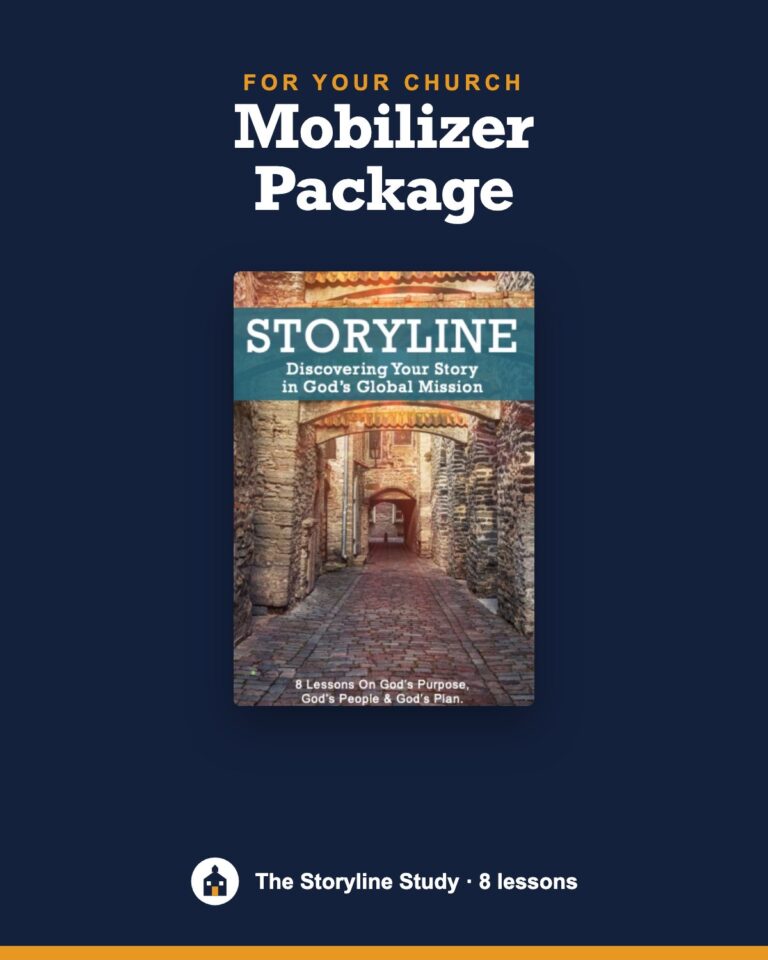
If you want a comprehensive study that traces God’s heart for the nations from Genesis to Revelation, Storyline Study is the perfect next step.
In 8 weeks, your team will:
- Discover how missions isn’t a New Testament add-on. It’s been God’s plan since creation
- Understand what “unreached people groups” actually means and why they matter
- Identify YOUR specific role in the Great Commission (not everyone goes, but everyone has a part)
- Create a personal action plan for missions engagement beyond short-term trips
Storyline has been translated and used in 8 languages: English, Spanish, Russian, Ukrainian, Latvian, Romanian, Portuguese, and Indonesian. It helps people see how they fit into God’s global story, not just how to prepare for a mission trip.
Check out Storyline Study here and equip your team to serve with biblical depth and lasting impact.
May God bless your mission journey, and may His Word transform the way you see His mission.
Preparing a mission team?
Get the 10-passage team Bible study plan by email, with a few short emails to help your team prepare, serve well and come home ready to keep going.
