




22 Oct Mission Trip Planning Checklist: A 12-Month Timeline for Leaders
If you’re leading a team, a good mission trip planning checklist saves you from the two things that hurt trips most: paperwork that shows up late and a team that meets for the first time at the airport. The first is a logistics problem. The second is a preparation problem, and it’s the one most checklists skip.
This checklist covers both. It walks through how to plan a mission trip from about a year out to a few weeks after you come home, with the practical items (partners, passports, budgets, forms) and the team items (Scripture, prayer, training, roles) side by side. Print it, share it with your co-leaders, and adjust the dates to your trip.
How to plan a mission trip: start with why and with whom
Before you set dates or open a spreadsheet, answer three questions with your pastor or missions team.
Why are we going? A trip should serve something bigger than itself. In Genesis 12:3 God promises Abraham that “all peoples on earth will be blessed through you,” and in Revelation 7:9 John sees “a great multitude that no one could count, from every nation, tribe, people and language” standing before the Lamb. A short-term trip is one small part of that story. If your team understands this before they go, they’ll serve differently while they’re there and they’ll keep going after they come home.
Who are we serving with? The best trips serve a local church or national leaders who will still be there after you leave. Ask your host what they actually need, and let their plan shape yours. This is how we work at Storyline: we partner with national leaders, and our 2026 mission trips are built around what those leaders are already doing.
Who should go? Decide the profile of the team before you recruit: students, families, adults, people with medical or construction skills, first-timers. The host’s needs should drive this too.
The mission trip planning checklist
Most church trip timelines start 10 to 12 months out. If your trip is international or your group is large, give yourself the full year. If it’s a domestic weekend trip, you can compress the early steps.
10 to 12 months before the trip
- ☐ Pray with your leaders about the purpose of the trip
- ☐ Get your pastor’s blessing and involve your church leadership
- ☐ Choose a host partner and ask what they need from a team
- ☐ Set trip dates, plus dates for team meetings, commissioning and debrief
- ☐ Build a first budget: flights, lodging, food, in-country travel, insurance, ministry costs
- ☐ Check entry, visa and vaccination requirements for the country
7 to 9 months before
- ☐ Announce the trip and open applications with a clear deadline
- ☐ Recruit co-leaders first
- ☐ Set the cost per person, the deposit and the payment schedule
- ☐ Tell every applicant to check their passport today
- ☐ Start a shared tracker for each person: forms, payments, passport, training
4 to 6 months before
- ☐ Confirm the team and collect deposits
- ☐ Book group flights
- ☐ Collect liability waivers, medical forms, emergency contacts and parental consent for minors
- ☐ Buy travel medical insurance (with evacuation coverage)
- ☐ Help each team member start fundraising and recruit prayer partners
- ☐ Decide how team money will be handled: church card, reimbursements or cash
8 to 10 weeks before: team preparation begins
- ☐ Start weekly team meetings (see the eight-week plan below)
- ☐ Write a team covenant together
- ☐ Schedule travel clinic appointments (some vaccines take several weeks)
- ☐ Begin learning the history, culture and a few phrases of the place you’re going
- ☐ Set up a video call with your host partner
2 to 4 weeks before
- ☐ Final payments to the host and final payments from the team
- ☐ Copies of passports and insurance cards (one with a leader, one at home)
- ☐ Register the trip with the State Department’s STEP program (US travelers)
- ☐ Packing list and a practice pack with weighed bags
- ☐ Assign roles: devotions, photos, supporter updates, first aid, money
The week you leave
- ☐ Commissioning service with your church
- ☐ Send prayer partners a daily prayer guide
- ☐ Confirm flights, ground travel and the first night’s lodging
- ☐ Rest
After you return
- ☐ Team debrief within 2 to 4 weeks
- ☐ Thank supporters with a specific story
- ☐ Report to your church what God did
- ☐ Help each person name one next step in God’s mission
Team preparation: an eight-week plan
Here is the part most checklists leave out. Your team will spend more time preparing together than they will on the trip itself, so those meetings matter. Use them for more than logistics.
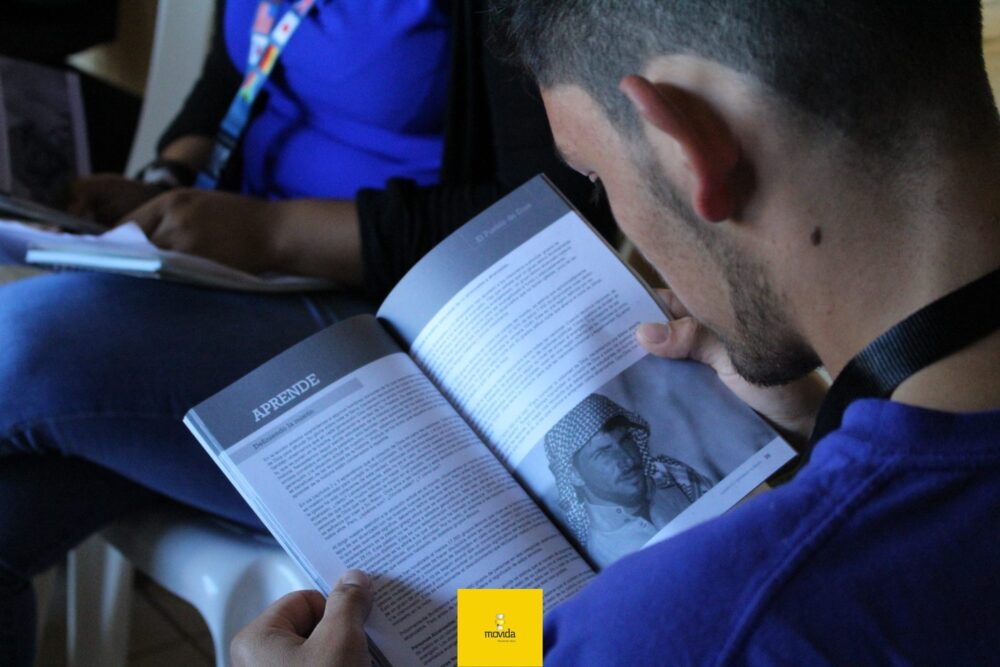
We built the Storyline Study for exactly this kind of group. It’s an eight-week Bible study on God’s heart for the nations, with a short video for each lesson and 15 to 20 minutes of daily reading. It starts with the biblical story and ends with each person writing down 3 to 5 concrete steps. For a mission team, that means people show up knowing why they’re going and leave knowing what they’ll do when they get home.
Here’s one way to pair the eight lessons with your planning meetings:
| Week | Storyline lesson | Planning item for the same meeting |
|---|---|---|
| 1 | Your Story Is Part of a Greater Story | Share testimonies, start the team covenant |
| 2 | God’s Mission Through the Bible | Passport and forms check for every person |
| 3 | The Great Commission Explored | Fundraising progress, prayer partner lists |
| 4 | Ordinary Heroes of Modern Missions | History and culture of your host community |
| 5 | Defining the Mission | Video call with your host partner, ministry plan |
| 6 | Becoming a World Christian | Health, safety and packing |
| 7 | The Five Practices of a World Christian | Team roles, practice sharing the gospel and your testimony |
| 8 | Live the Wartime Lifestyle | Commissioning, and each person’s plan for after the trip |
If you’re leading the group, the Small Group Leader Package ($79) has the study guide, all eight lesson videos, the leader’s guide, group resources and a coaching call. Team members can each get the digital study with videos ($24). Not sure yet? You can try Week 1 free from the Storyline Study page.
Documents and safety
This is the section that causes the most last-minute panic, so start it early.
- Passports. Some countries require a passport that is valid for six months after you arrive. Check every team member’s expiration date when they apply, and check current processing times on travel.state.gov.
- Visas and entry rules. Your host partner usually knows these best. Confirm them with the country’s embassy as well.
- Health. The CDC’s Travelers’ Health pages list recommended vaccines and medicines by country. Some vaccines need more than one dose, so book clinic visits early.
- Insurance and waivers. Travel medical insurance with evacuation coverage, a signed release for each person, emergency contacts and medical information. Church insurer Brotherhood Mutual has a useful safe mission travel checklist for leaders.
- Minors. Signed parental consent, a medical release and a clear adult-to-student ratio.
- Registration. US citizens can register their trip with the State Department’s Smart Traveler Enrollment Program so the embassy can reach them in an emergency.
Budget and fundraising
Build the budget with your host, not from guesses. The usual lines are airfare, lodging, meals, in-country transportation, insurance, ministry supplies and a contingency.
For fundraising, give your team a simple support letter outline and a timeline. Fundraising goes better when people explain why they’re going and invite others to pray as well as give. We cover support letters, platforms and thank-yous in more detail in How to Prepare for a Mission Trip: 10 Essential Resources.
Packing checklist
Ask your host for a packing list first, since dress codes and climate vary. Beyond that, most teams need:
- ☐ Passport, copies, insurance card and the host’s contact information
- ☐ Prescription medicines (in original containers, with extra days)
- ☐ A small first aid kit, sunscreen and insect repellent
- ☐ Modest clothes that fit the local culture, and work clothes if you’ll be serving with your hands
- ☐ A Bible, a journal and your team devotions
- ☐ A small gift for your hosts, if your host partner says it’s appropriate
During the trip
Plan a rhythm before you go so you don’t have to invent one when everyone is tired. Most teams do well with a short devotion and prayer every morning, a check-in every evening, and one person assigned each day to send an update to supporters. If you need material for those mornings, we put together mission trip devotions for teams: short readings for before, during and after the trip.
After you come home
When Paul and Barnabas finished their first journey, they went back to the church in Antioch that had sent them, and “gathered the church together and reported all that God had done through them and how he had opened a door of faith to the Gentiles” (Acts 14:27). That is a good model for your debrief: gather, report, and give the credit to God.
Plan the debrief before you leave. Ask each person what surprised them, what was hard, and what God showed them. Then ask the question that decides whether the trip was a one-time experience or a turning point: what will you do now? Some will go again or go longer. Many will pray, give, send others or welcome people from other nations who live nearby. Help each person name one step.
Preparing a mission team?
Get the 10-passage team Bible study plan by email, with a few short emails to help your team prepare, serve well and come home ready to keep going.
Mission trip planning FAQ
How far in advance should you plan a mission trip?
For an international team trip, start 10 to 12 months ahead. That leaves time to choose a host, recruit, raise support, renew passports and finish vaccinations. A domestic trip can often be planned in four to six months.
How many team meetings should we have before a mission trip?
Plan on at least eight. Weekly meetings for the last eight to ten weeks give you time to study Scripture together, build trust, train and finish logistics without cramming everything into one orientation night.
What should be on a mission trip checklist?
Purpose and host partner, dates, budget, team recruitment, passports and visas, vaccinations, insurance and waivers, fundraising, team training, packing, a daily rhythm for the trip, and a debrief after you return.
What should a mission team study before the trip?
Start with what the Bible says about God’s mission, from his promise to Abraham to every nation worshiping in Revelation 7. Our mission trip Bible study gives a team ten passages to work through, and the Storyline Study takes eight weeks to walk through the whole story and help each person find their role.
Keep going after the trip
A mission trip is a few days or weeks. God’s mission is the whole story, from Genesis to Revelation, and your team is part of it the day they get home. If you want your people to come back with more than photos, give them a way to see that story before they leave.

Start your team on the Storyline Study. Eight lessons on God’s heart for the nations, with video teaching, built for groups. See the Storyline Study.
More for mission teams:
- How to Prepare for a Mission Trip: 10 Essential Resources
- Mission Trip Devotions for Teams
- 7 Mission Trip Bible Verses for Churches and Teams
- Gospel Conversation Starters
